
 Omnicom Engineering’s OmniVision system triumphed in the Asset Management category of the annual Institute of Engineering and Technology (IET) Innovation Awards, winning yet another accolade for their Rail Track Inspection system.
The OmniVision system, installed on several specifically designed Measurement & Inspection trains, represents a technological revolution in railway inspection by combining high-speed high-resolution cameras and cutting-edge pattern recognition software to automate the detection of track defects. The system improves both the quality and safety of the process whilst saving huge amounts of time and money. Omnicom chose Multipix Imaging and their vision component knowledge to assist them in achieving this successful solution.
The Objective:
This project’s aim was to allow Network Rail to improve the safety, quality and efficiency of track inspection while reducing the need for staff to go on track to undertake basic visual inspection.
Network Rail selected Omnicom to develop the Plain Line Pattern Recognition (PLPR) system known as OmniVision. This consists of an image acquisition system called OmniInspector linked to a track geometry measurement system. The system includes linescan cameras, profile cameras, a high grade lighting system, positioning system, thermal cameras and image recording hardware. The system is designed to capture raw, uncompressed images to maintain maximum image quality whilst travelling at 125 mph and the cameras capturing at up to 76kHz, a very significant technical challenge on its own. To accommodate the immense amount of data collected, a substantial amount of storage and image processing equipment is required.
All images are synchronised and positioned using the Real Time Positioning System (OmniRTPS). In addition, geometry data is synchronised with the imagery. The data is logged onto a high density, robust storage network on the vehicle. At the end of the shift, image processing algorithms are run on the images and candidate assets and defects are presented to the On Train Inspector for validation and reporting.
The Solution:
Most image processing applications have the camera static and the items to be inspected moving. What’s more, this generally occurs in a controlled environment (temperature, lighting etc.) but this was not the case for this challenging application. OmniVision has cameras, lighting and lasers mounted to a high speed, moving vehicle and the items to be inspected are static in hugely varying lighting, temperature and weather conditions. The vehicle travels at 125mph, with OmniVision capturing raw linescan images at 0.8mm, thereby recording hundreds of miles of data each day. This is compared to the ability of a track engineer who would visually inspect just a few miles of single track in a single shift.
The image processing software then has to analyse this information looking for defects such as missing or misaligned fasteners under various conditions. All of this has to be done within a 48 hour window of the train running and capturing the data.
Significant project challenges had to be overcome – from the design of the camera alignment to creating the correct lighting conditions with consideration to external factors such as shadows caused by the sun and creating images of a high enough quality to be processed from the desktop.
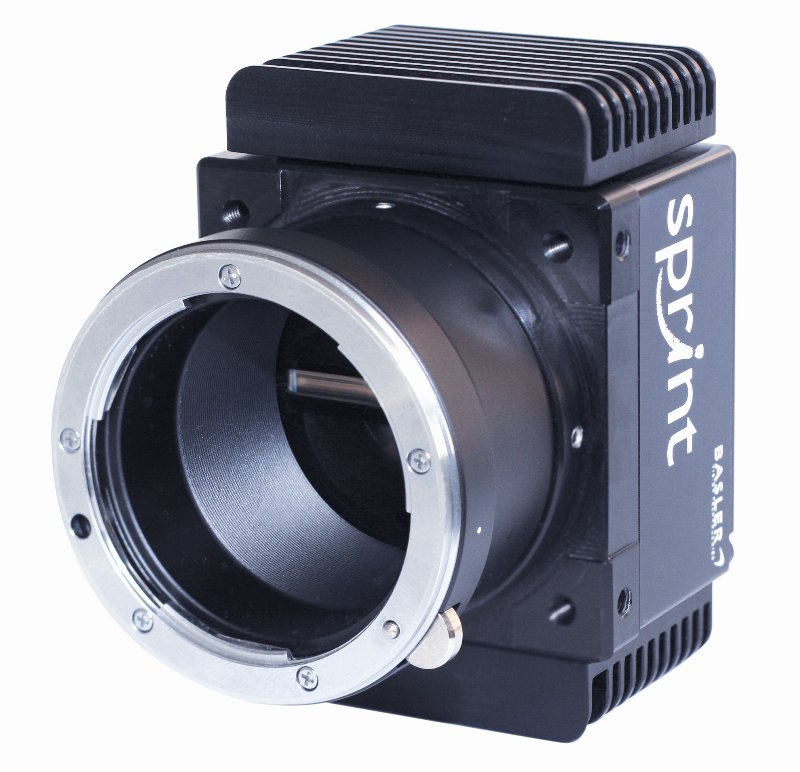
Multipix Imaging worked closely with Omnicom in recommending and specifying the vision components; combining many different aspects of machine vision technology, ranging from 3D to thermal, with the visual imagery being captured by a series of Basler Sprint Linescan cameras with the scene being illuminated using ProPhotonix Cobra LED line lights. The high speed data is recorded uncompressed direct to hard disk using IOI Industries DVR CORE which is a Solid State Drive based storage device. The image data is then processed by MVTec’s HALCON and results are combined with the extensive set of data also being processed and stored, from other non-vision devices, which makes Omnicom’s OmniVision such a powerful solution.
The Benefits:
The system is currently in live operation on certain areas thereby reducing the needs for manual patrols. The demands on the railway from infrastructure improvement and increased passenger demand leading to increased capacity demands means that traditional methods of manually inspecting the track is very costly in terms of track possession time. Safety is key and there is an obvious increased risk when you have staff working on the track. This machine vision technology represents a step change in Inspection capability for Network Rail and the financial benefits in terms of reduced numbers of staff on site, better asset visibility and improved maintenance are helping Network Rail deliver more capacity within reduced operational budgets. This is therefore delivering significantly better value for money to Network Rail’s investors.
Omnicom’s CEO Stirling Kimkeran said, “It’s great to see Omnicom’s work in the rail industry being recognised with this international award. I would like to thank everyone involved in the project. It’s an exciting time to be working in a technology driven sector.”
These extremely competitive awards attracted over 400 entries from 30 countries, with OmniVision also making the shortlist in the Navigation & Surveillance Communications category. “This year’s competition has been the most international to date. It’s pleasing to see just how companies recognise the value of the IET’s international reach,” said IET president Barry Brooks. “The winners were recognised as the most forward thinking, pioneering advances in their fields.”
Julie Busby, director at Multipix Imaging added, “We are delighted to have played a part in this award winning solution and thank the component manufacturers who gave us their support and assistance with this challenging application.”
Omnicom has a vast amount of experience in high speed image capture and analysis and, although the roots of the company are in transport and infrastructure, they also apply this knowledge to other industry sectors that have similar demanding machine vision requirements.
