Industrial automation is entering a new phase. Machines are no longer isolated systems performing fixed, repetitive tasks. Today’s factories are becoming intelligent environments where machine vision, motion control, edge AI, industrial networking, and real-time analytics work together to improve efficiency, quality, and responsiveness across the production floor.
While the promise of smart manufacturing is compelling, the path to implementation is far more complex.
Engineering teams are now expected to integrate high-speed sensing, low-latency decision-making, predictive maintenance, robotics, and scalable connectivity into unified architectures that operate reliably in harsh industrial environments. As factories become more connected and autonomous, the challenge is no longer simply automating processes; it’s designing systems that can adapt, optimize, and scale in real time.
This shift is driving demand for a more holistic approach to industrial system design.
The convergence of machine vision, motion control, and AI
 Modern automation platforms increasingly rely on multiple intelligent subsystems that work together simultaneously.
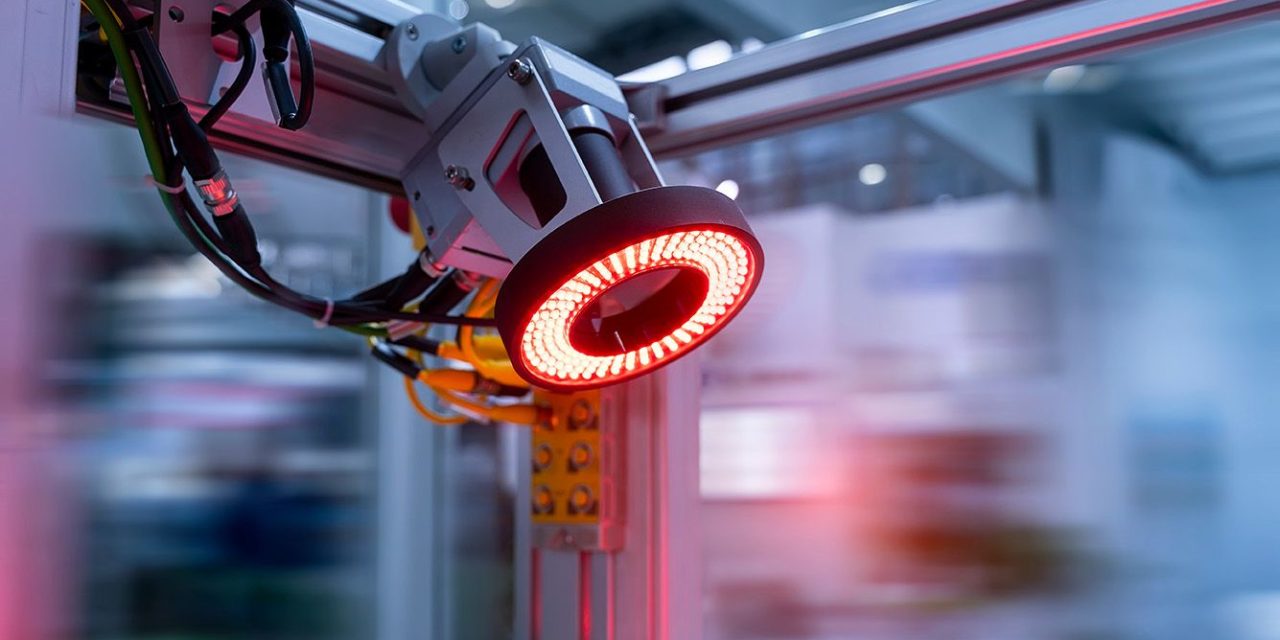
Machine vision systems provide real-time inspection and quality monitoring, helping manufacturers reduce waste, improve throughput, and identify defects earlier in the process.
High-resolution cameras, sensors, and AI-driven inference engines can now detect anomalies in milliseconds, enabling immediate corrective action on the production line.
At the same time, advanced motion and motor control systems are enabling more precise robotics, conveyor systems, CNC machinery, and autonomous equipment. High-speed control loops, real-time feedback systems, and modern inverter architectures are helping manufacturers achieve tighter synchronization, higher efficiency, and smoother operation across increasingly dynamic environments.
Adding edge AI further accelerates these capabilities by moving data processing closer to the machine itself. Rather than relying on centralized cloud processing, edge-based systems can analyze sensor data locally, dramatically reducing latency while improving reliability and operational continuity.
Together, these technologies are creating production systems that can perceive, decide, and act autonomously.
Why integration has become the real challenge
While the technologies themselves continue to mature, integration remains one of the biggest obstacles for engineering teams.
Industrial systems must now coordinate multiple high-speed data streams, synchronize sensors and actuators, manage power efficiently, maintain cybersecurity, and support long lifecycle requirements, all while meeting strict performance, safety, and compliance standards.
For example, a machine vision platform may require synchronized cameras, FPGA preprocessing, GPU or NPU acceleration, secure industrial networking, and edge inference pipelines that operate together within tight thermal and power constraints.
Similarly, modern motor control architectures demand precise coordination among power electronics, sensing systems, control algorithms, isolation circuitry, and communication protocols to maintain stable operation under varying loads and environmental conditions.
As these systems become more interconnected, design decisions in one subsystem increasingly affect the performance of another.
This complexity is driving manufacturers to look beyond individual components toward complete system-level solutions.
Designing for scalability and reliability
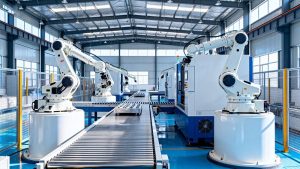 Scalability is becoming a critical requirement across industrial automation environments.
Factories are expected to support expanding sensor networks, distributed intelligence, autonomous robotics, and growing data volumes without incurring excessive infrastructure costs or causing operational disruption.
Edge computing is playing an important role in this transition. By processing data locally, manufacturers can reduce bandwidth requirements, lower cloud dependency, and maintain operational resilience even during intermittent connectivity.
At the same time, energy efficiency is becoming an increasing priority across automation architectures. The adoption of silicon carbide (SiC) and gallium nitride (GaN) technologies is improving switching performance, reducing thermal losses, and increasing overall system efficiency in power conversion and motor control applications.
Cybersecurity is also becoming inseparable from system architecture. Connected industrial environments require secure communication protocols, segmented networks, encrypted data transfer, and hardware-level protections to support long-term operational reliability.
The result is a new generation of intelligent industrial platforms designed not only for performance but also for adaptability, maintainability, and future scalability.
Supporting industrial innovation from concept to deployment
Successfully deploying these systems requires expertise that spans hardware, software, connectivity, power, AI, and supply chain management.
Arrow Electronics helps manufacturers navigate this complexity by supporting the full lifecycle of industrial automation development from architecture definition and component selection to prototyping, validation, and production scaling.
This includes support for technologies such as:
- Machine vision and edge AI systems
- Robotics and motion control
- Embedded processing platforms
- Industrial connectivity and IoT integration
- Power management and next-generation semiconductors
- Sensor integration and real-time control architectures
Arrow also provides access to a broad ecosystem of suppliers, engineering resources, and field application expertise, helping manufacturers accelerate development while reducing design risk.
As industrial automation continues evolving toward increasingly autonomous and intelligent environments, success will depend on more than isolated technologies alone. It will require coordinated, system-level architectures that bring sensing, compute, control, and connectivity together seamlessly.
The factories of the future are not simply automated. They are adaptive, data-driven, and continuously improving. Building them requires an integrated approach from the very beginning.