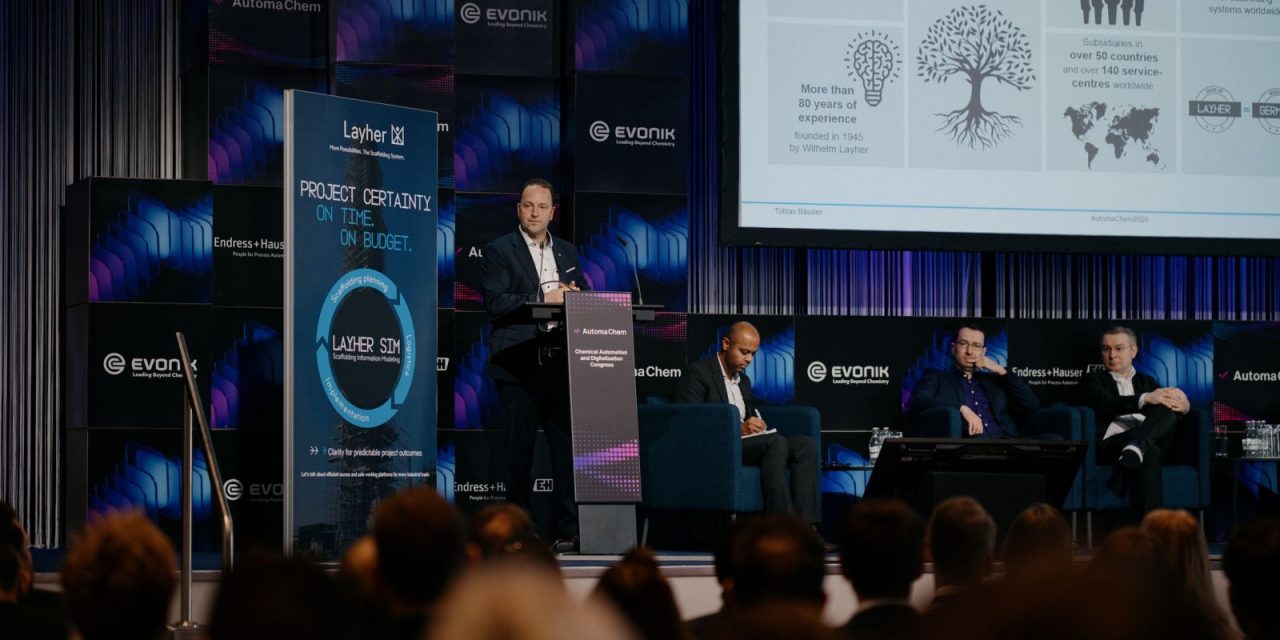
The digital wave has reached the chemical sector, bringing innovations, forward-thinking conversations and collaborations together in one place. That meeting point was the debut edition of the Chemical Automation and Digitalisation Congress (Automa Chem) 2026 in Berlin, hosted by Evonik Operations with a business programme covering Chemical Plant 4.0, digital R&D, AI for operations and other demanding topics.
Was 2026 a difficult year to launch a project, rebrand or deploy new technology in chemicals? The pressure was visible in the numbers. German chemical production fell 2.5% in 2025, capacity utilisation dropped to a historic low of 70%, and half of companies reported too few orders. With those questions still open, the industry came together in Berlin on 26-27 October to work through them.
More than 230 delegates from chemical producers, EPCs, CDMOs, industrial gas suppliers, biotech and technology development gathered at Automa Chem 2026 to share expertise and build collaborations. Supported by Evonik Operations as the Host Sponsor and WACKER Chemie, Covestro, LyondellBasell, Worley and Linde as Regional Partners, the event had a meaningful agenda, covering demanding questions.
Digitalisation, Sustainability & the Future of Chemicals
Sustainability and digitalisation are often treated as separate workstreams, with their own budgets, teams and reporting lines. In practice, they depend on the same data. Emissions reporting, energy use, waste and yield all come from the same plant systems that digitalisation is meant to connect.
Over the two days of Automa Chem 2026, sustainability was raised in several presentations. Leading companies such as Linde, BASF, Technip Energies and others presented their way to cut emissions.
Markus Hartung of Evonik Operations, Vice President Region EMEA & Global Commercial Processes Catalysts, focused on the role of innovation and partnerships in decarbonising the chemical value chain. The topic of plastic waste was covered by Séval Schichtel, Global Business Development & Sales Manager at Clariant, in a talk on purification solutions that enable efficient chemical recycling.
Sustainability ran through both days, alongside the technology enabling it . Daniela Araujo dos Santos, Sustainability Lead at Technip Energies, put it this way when sharing her impressions: “By investing in innovative, sustainable solutions, integrating sustainability into the core of our business strategy and project execution, and empowering our people and local communities, we believe we can create shared value for our entire ecosystem.”
Inside the Next-Generation Plant
R&D, operations and assets becoming digital by default, with digital twins, connected equipment and real-time data replacing periodic reporting – that plant-level change is what Chemical Plant 4.0 describes. WACKER Chemie, Shell, Worley, LyondellBasell and other leading companies presented their view on the issue.
Dr. Ewa Gajewska, Head of Product Management for SYNTHIA® at Merck, spoke about connecting AI with chemical expertise and what the next generation of scientific assistants will look like. The platform behind it draws on over 120,000 expert-coded reaction rules and a database of 8.3+ million commercially available compounds from more than 90 suppliers.
Additionally, Dr. Susanna Voges and Jaime Aguilera of Voovio spoke on how Enhanced Reality reduces human error through stronger operator competency. They pointed to a controlled experiment at a Texas petrochemical facility, where the technology helped operators reach procedure competency 65% faster (3.3 vs 9.75 hours) and cut subject matter expert time by more than 73%. The practical gain is fewer incidents, safer shifts and less production lost to mistakes that could have been avoided.
The Sector’s Next Step
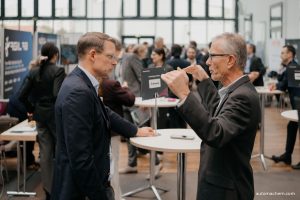
The first edition of Automa Chem 2026 ended as the final presentation closed and the last word was spoken – two days of innovations, tech-driven solutions and dialogues that kept going. Robert Witek, Marketing Manager F&B for the Central and Eastern Europe (CEE) region at Ecolab, offered his take on the debut event: “Automa Chem 2026 was full of great conversations, fresh perspectives, and the kind of encounters that remind you why bringing people together matters.”
Looking ahead to 2027, the focus shifts from survival questions to technologies moving out of the pilot phase and into industrial deployment. Frost & Sullivan identifies software-defined automation, industrial AI, predictive analytics and digital twins as the key drivers in chemical plant automation.
The next edition of Automa Chem (22-23 November, Brussels) takes these developments as its starting point, addressing the technologies now moving into industrial deployment and what it takes to make them work at the plant level.
Get early access to the 2027 business programme and reserve a place to share how digitalisation should be done: https://sh.bgs.group/5bd