Fortress Technology Unveils Vyper Vision at PPMA 2025 – Stand B32
The scale of food waste globally continues to prompt multiple campaigns. Adding label inspection to its food safety repertoire, Fortress Technology examines how deploying a combination of inspection, vision and automatic reporting technologies can help to address the urgency of the food waste situation and drive down food loss in supply chains. Sales Director Phil Brown expands.
Over 59 million tonnes of food waste (132 kg per inhabitant) is generated annually in the EU (Eurostat 2024). The cost of this waste ethically, financially and environmentally is huge, and the challenges continue to grow. Manufacturing plays a big role in tackling the issues. Nearly half of all food waste is generated in the supply chain (46%), with 19% from the manufacturing of food and beverages – the equivalent of restaurants, food service and retail combined. According to Eurostat, another 8% of food is wasted in primary production.
Significant progress is being made as a result of employee training, optimising production systems, and improving shelf life and storage. However, there’s still a way to go if the global goal of cutting wastage in half by 2030 is to be reached.
Beyond quality control, modern contaminant detection, checkweighing and vision inspection systems are capable of driving down and eliminating food loss – delivering bottom line savings while helping manufacturers meet CSR targets.
Where factory waste originates
Waste can arise at all stages of the production process. Manufacturing drivers include stringent specifications, whereby slightly off-spec but edible food is discarded. This may occur due to labelling defects, or because of increasingly high aesthetic expectations from consumers and retailers.
Peelings, trimmings and discarded cuts are other common issues. These can arise through poor floor layout, overstocking and overproduction. Yet, according to UK NGO WRAP, machinery performance problems can be one of the main culprits of food waste in the processed food sector.
This doesn’t just impact profit margins. Poor management practices can threaten brand image, especially given the rising number of consumers who consider social and environmental pursuits when purchasing. Nearly two-thirds in one survey preferred buying from firms that reflect their beliefs. Additionally, 62% are drawn to brands focused on improving the environment.
False rejects add up
With inspection systems, one of the most common sources of waste is false rejects – when a good product is identified as containing a contaminant or flagged for incorrect weight. Industry experts estimate that false rejects can cost £14,000 per line per year.
When specifying inspection systems, reliability and accuracy are paramount. Line vibrations can cause false readings, resulting in sellable products being rejected. Fortress Technology designs its inspection systems with a heavier framework to reduce vibrations, significantly lowering the risk of false contaminant and weight rejects.
Checkweighing systems bring further benefits, including the potential to reuse non-conforming products. For example, the Raptor Combination and X-ray Combination systems are equipped with independent reject mechanisms, with dual bins to separate contaminant and weight rejects. Weight rejects can often be reworked and sent through secondary packaging, diminishing unnecessary waste.
Vision in focus
Recalls of unsafe products, although rising, often reflect more complex supply chains and improved traceability rather than falling standards. The most common reason for recalls, however, is incorrect labelling. This can stem from wrong data input, poor quality printing, damaged labels, illegible barcodes, or mismatched packaging.
 Since label errors account for the greatest number of recalls, followed by hygiene issues and foreign object contaminations, machine vision is being increasingly adopted.
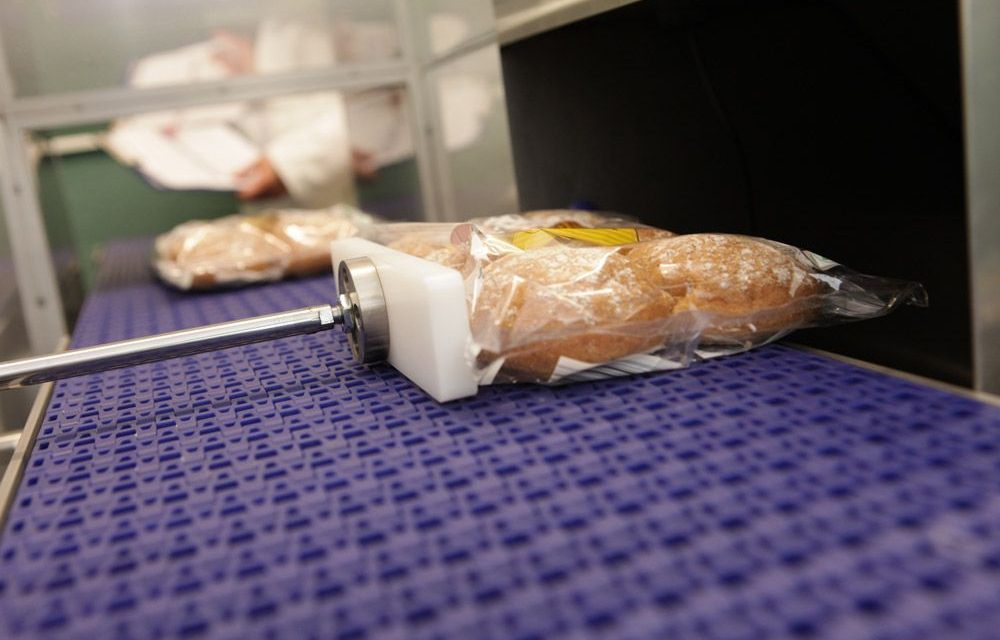
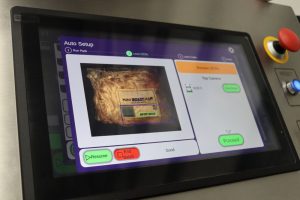
To address this, at PPMA 2025 Fortress launches Vyper Vision. Providing top and bottom inspection, the system uses advanced optical character recognition (OCR) to detect and reject faulty labels, printing errors and poor-quality print in real time.
Demonstrated on a compact Raptor Combination metal detector and checkweigher, Vyper Vision inspects every pack label as it is being checked for contaminants and weight. Ensuring complete compliance with retailer food safety and labelling requirements, the system is easily integrated into existing data reporting networks.
Precision weighing reduces giveaway
Another effective way to tackle food loss is precision checkweighing. The Raptor series accurately inspects packages and removes those that are overfilled or incomplete. Customers have reported up to a 55% reduction in product giveaway, resulting in significant savings.
To further reduce waste, multiple checkweighers can be networked. This allows results to be pooled across identical product groups and pack sizes to calculate average batch weight. A controlled feedback signal can then be sent to the filler, minimising product giveaway and eliminating the need for human intervention.
Avoiding human error
Machinery stoppages and recalls can swiftly impact profitability and brand reputation. Manual monitoring, meanwhile, is often prone to human error.
Automatic testing therefore plays a vital role in manufacturing due diligence. All Fortress Technology systems feature an innovative, failsafe, paperless, fully auditable COP test routine. Machines pre-configure tests by retailer and product, alerting QA managers each time an evaluation is due. Once performed, a dated due diligence report is automatically created and signed by the operative on the HMI screen. By using automation, transparency and traceability are increased and errors removed.
All of these innovations highlight the value of integrated inspection technologies in reducing waste and strengthening food safety, affirms Phil Brown. At PPMA Show 2025, Stand B32, Fortress will demonstrate this unity in action – helping manufacturers improve efficiency, cut costs and tackle one of the food industry’s most urgent challenges.