Every plant has met the version of AI that lives on a slide. The pilot that looked brilliant in a workshop, produced a tidy dashboard and then quietly stalled somewhere between the data science team and the people who actually run the unit. What is changing now, and what makes the next twelve months genuinely interesting, is that the technology has started to survive contact with the control room. It is moving from something demonstrated to something operated, with an engineer still firmly in the loop rather than watching from the sidelines.
Why oil and gas is the hard test
This shift is not confined to oil and gas, but the sector is one of the more demanding places to attempt it. Margins are thin, assets are old, safety cases are unforgiving and a wrong recommendation carries consequences that a warehouse robot never has to worry about. If autonomous operations and industrial AI hold up here, they tend to hold up anywhere. That is the backdrop for the Oil & Gas Automation and Digitalisation Congress (Automa) 2026, which runs in Amsterdam on 5-6 October and brings the operators, EPC contractors and technology providers wrestling with exactly this problem into one closed-door room.
From pilot to control room
The programme reads less like a technology showcase and more like a status report on where automation actually is. At the Leaders Talk, ExxonMobil looks at what it takes to scale industrial AI past the pilot stage. Tata Consultancy Services examines agentic AI use cases, the same question of delegated autonomy and accountability that the wider automation world is currently circling. Wood reframes maintenance not as a cost centre but as a live source of operational intelligence, with AI as the engine underneath.
Digital twins that earn their keep
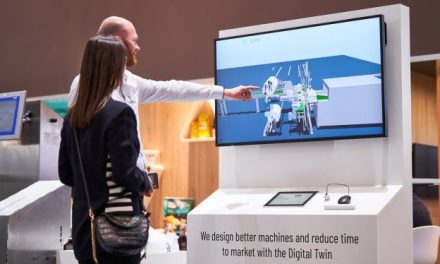
Digital twins get a session of their own at Automa 2026, and it is refreshingly free of the usual gloss. Engineers from Petrobras trace a path from hybrid process models to generative AI, showing how a twin earns its keep in day-to-day refinery decisions instead of sitting in a boardroom presentation. Siemens brings a case study that runs from 3D printing through to a working digital world, and Moeve makes the case for operator training simulators graduating into permanent operational assets rather than one-off commissioning tools. Tecnimont, meanwhile, connects advanced work packaging to real-time plant and simulation data, the unglamorous plumbing that decides whether a capital project lands on schedule or slides quietly past it.
 Autonomy, and who answers for it
For an audience that has been reading about AI agents making decisions faster than anyone can audit them, the roundtable on autonomous IoT and smart operations at Automa 2026 hits close to home. Moeve walks through the actual distance between seeing your data and trusting a system to act on it, which is the gap most plants are stuck inside right now. ADNOC presents autonomous reliability-centred maintenance, and, in the session that keeps the optimism honest, CYBER RANGES and OTIFYD tackle the other side of connecting everything to everything: how operators build the capability to defend industrial systems once those systems can act on their own. It is the responsibility question the whole field is asking, framed by people who cannot afford to get it wrong.
The receipts from last year
None of this arrives from nowhere. At Automa 2025, Imubit’s keynote on AI in industrial sustainability made an argument that has aged well: closed-loop AI belongs in the control room, not the innovation lab, and its job is to extend the reach of the engineers already there rather than replace them. Fluor offered the receipts, describing work with TU Delft on deep learning for P&ID correction and an in-house diagnostics tool that uses machine learning to flag project risks before they turn into overruns. Neither talk was about AI in the abstract. Both were about applying it, which is the harder and more useful conversation.
A room built for comparing notes
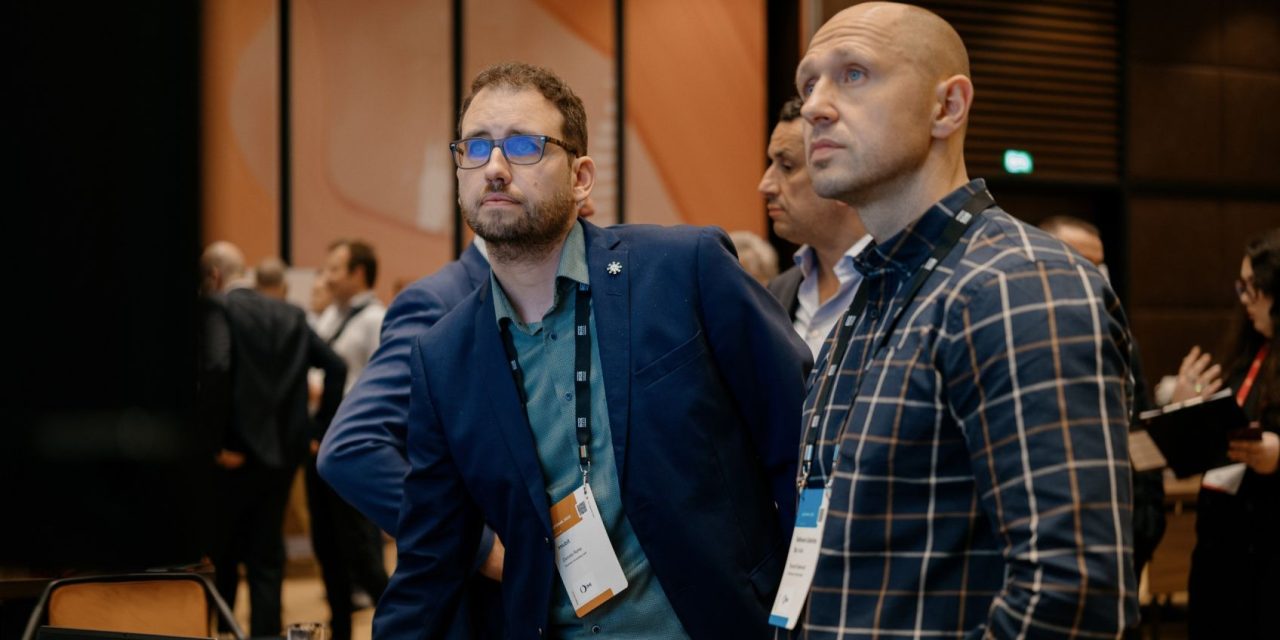
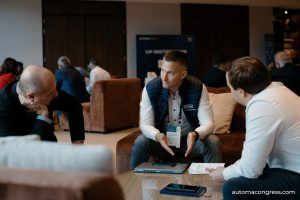
That practical bias is really the point of the event. Automa 2026 runs as a closed-door Congress built around structured meetings, not a sprawling exhibition floor, and the confirmed roster, including Shell, Fluor, Linde, Repsol, MOL Group, bp, Equinor, Aramco and others, reflects that: this is a room of people who run these operations, not people watching from the sidelines.
For anyone working in automation, the value of watching a sector this constrained is straightforward. Its constraints are simply an early version of everyone else’s. The full business programme is available on request through the Automa Congress website: https://sh.bgs.group/4mp