Since the beginnings of industrialized production, manufacturing companies have faced the challenge of obtaining enough skilled labour to run the new machines. Automation has been seen as the answer to this challenge, leading to today’s fourth industrial revolution, otherwise known as Industry 4.0.
However, it’s not just the technology itself that is leading to radical changes in production methods. Societal pressures are also leading manufacturers to look for answers to many other challenges.
As well as labour shortages, exacerbated by the retirement of skilled workers, manufacturers are facing new regulations, inflationary pressures, supply chain shortages, and a need to improve profitability.
The maintenance role has been under particular pressure. Despite the skills shortage, Maintenance, Reliability, and Operations (MRO) teams are expected to be more efficient and productive than ever before.
To aid maintenance, practitioners of Industry 4.0 are focusing on condition monitoring, as part of the drive to connect and better understand the machines that make up the production system.
Condition monitoring uses sensors and hardware to give an overview of what is happening to individual machines. By monitoring key data such as vibration or temperature, condition monitoring helps maintenance personnel monitor more equipment more easily, and in less time. The result is an assessment of which devices are likely to fail and in what timescale, allowing intervention when the machine needs it, rather than to some arbitrary scheduled maintenance scheme.
Overall, condition monitoring technology allows maintenance staff to:
- Continuously and safely monitor assets
- Discover root causes faster
- Monitor equipment remotely
- Deliver real-time alarms
- Use wireless sensors for more comprehensive monitoring
Below are five best practices that will ensure maintenance managers get the most out of machine condition monitoring technology.
Start with Asset Criticality
Any reliability strategy should start with an asset criticality assessment. This involves drawing up a master list of all assets; an assessment of what has been repaired and what remains to be repaired; an agreed criticality of each asset drawn up by interested departments such as engineering and productions; and the ease with which spare parts can be sourced for the asset.
Once the asset criticality assessment is in place, the next step is outlining the goals for deploying machine condition monitoring technology. The strategy should include an inventory of equipment to be monitored, the types of sensors to be used, and the frequency of data collection. Since it’s the most common and cost-effective solution, any condition monitoring program will likely include vibration analysis.
Use Wireless Vibration Sensors
Maximum flexibility can be achieved by deploying wireless vibration sensors. Easily installed and providing real-time data on an asset’s health, wireless sensors require less maintenance, and can be used to monitor equipment in hazardous areas or sites with limited access.
Wireless vibration sensors alert staff to machine faults quickly, particularly the four most common faults of imbalances, misalignments, damaged bearings and looseness, allowing the maintenance team to act to prevent failure.
Incorporate Handheld Vibration Analyzers
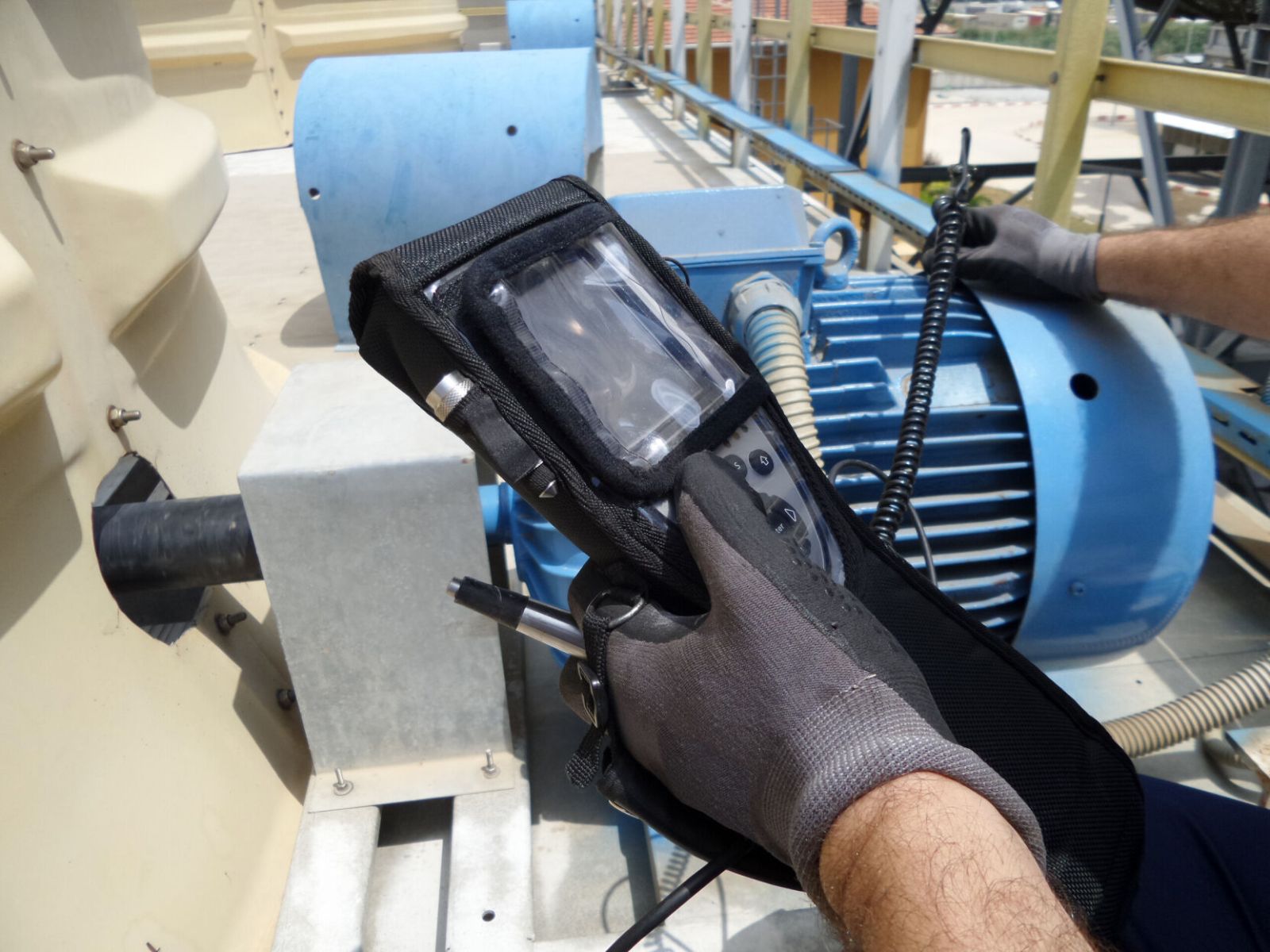
As a supplement to wireless sensors, handheld vibration analyzers allow technicians to quickly assess machine performance by measuring vibration levels, analyzing spectral data, and identifying potential problems. Their major benefit is the immediate vibration measurement information they can provide about machinery health, including motors, fans, and blowers.
Handheld analyzers can identify the four most common faults and are particularly useful for troubleshooting, root cause analysis, and identifying early warning signs of potential failures. They can also identify the fault location and severity.
Where they win over wireless sensors is their ability to collect almost any type of vibration measurement data and work on both constant and variable-speed machines. However they often need an expert to interpret the detailed data.
Implement Power Monitoring Tools
Power monitoring tools are essential for tracking energy usage and identifying potential problems that can affect machine performance. They can also help identify energy savings opportunities.
Use Analysis Software
Using data analytics software, reliability professionals can identify patterns, trends, and potential problems, helping identify root causes, optimize maintenance schedules, and improve overall equipment performance.
Machine condition monitoring technology is critical for maintenance teams trying to improve their strategy, helping improve equipment performance and reduce costly downtime.
By the Reliability team at Fluke