 acs (Air Cleaning Systems) have enjoyed a successful time at MACH 2014, with a high level of leads and first orders already received. Specialising in both mist control technology for cnc machine tools and downdraught filter benches for dust control, acs are well positioned to service UK manufacturing industries.
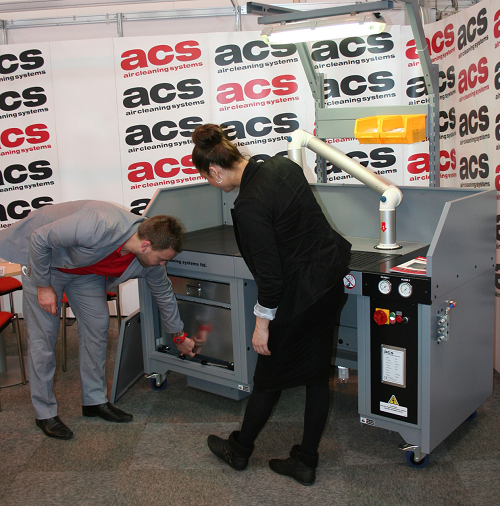
The dust control technology range was show cased by the FBS downdraught filter bench. This seated version of the filter bench provides an ergonomic and practical solution to the problem of controlling and removing airborne dry dust (or fume) generated by fettling, sanding, deburring, polishing and finishing applications. To achieve reduced running costs, acs supply, as standard, an inverter control to regulate the fan speed and reduce power consumption. Visitors to the MACH stand could witness the optional air control unit and timer functions. The air control unit enables the operator to work with air-powered tools that automatically power down or up when triggered by the air tool itself. Additionally, the timer offers an automatic power down function after a pre-programmed time interval
The mist control technology range was represented by the OMF1000. This free-standing unit is designed to connect directly to a machine tool and incorporates a 2-stage filtration process. Benefits of the OMF range of air cleaners include low maintenance costs owing to a washable pre-filter and long-life HEPA coupled with a 500 watt motor. The OMF1000 is an environmentally friendly, energy saving solution to coolant mist problems.
Commenting upon the success of MACH, acs managing director Mr Mark Lemkey said: “The marketplace is very environmentally aware and we are conscious of the needs of our customers as well as our environmental impact. So, with the FBS range and the OMF ranges, we have developed products that offer significant running cost reductions over competitor models whilst reducing the carbon footprint of acs and its customers. This was a definite selling point at MACH and stand visitors were clearly interested in the cost and environmental benefits of our range.”