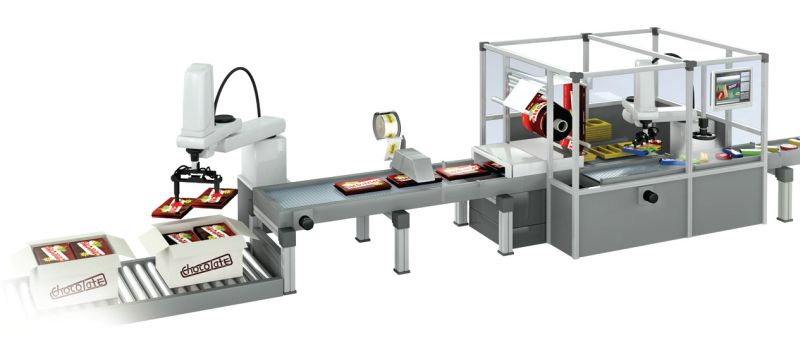
 With the machine building industry moving apace, UK machine builders are now under more pressure than ever before to develop solutions that are faster, more efficient, more flexible and more reliable, while remaining competitively priced. How to do this can present something of a conundrum. Here, Omron offers some words of advice
Technological advances over the past quarter of a century in the machine building industry have resulted in unprecedented leaps forward in speed and productivity, while exacting customer demands have also prompted innovations in machine flexibility and efficiency.
Yet in response to low cost alternatives from the developing world, UK machine builders are under more pressure than ever before. So, how do UK machine builders incorporate the best that new technology has to offer, without significantly increasing the cost to the customer.
The need for speed
 One area in which machine building has improved is speed. Yet, faster doesn’t necessarily mean better – no machine builder has ever tried to build a machine that is slower than the previous generation, but if speed is to equate to efficiency, all machine components must keep up.
“With manufacturers continuously looking at ways to improve production line efficiency, the preferred approach is to increase line speed, maximising the throughput of the machine to produce more products, faster,” explained Dan Rossek, Omron product marketing manager. “Whilst automated inspection is now widely adopted in modern manufacturing systems, as machine speeds have increased, vision systems haven’t been able to keep up and in some cases have become the limiting factor on a production line. Recently launched, Omron’s FH vision systems are the industry’s fastest – bottlenecks caused by inspection solutions are now a distant thought. The FH system allows users to inspect more features at a higher rate than ever before, enabling machines to run faster, providing better production efficiency and ensuring product quality.”
Productivity
When selecting the right technology for a project, machine builders must ensure that speed goes hand in hand with productivity. End users will expect a machine that is not only fast but also efficient, accurate and reliable, producing quality products with a minimum of down-time. Omron’s new Sysmac automation platform, a complete family of automation products, and programmed from within a single software package, accelerates development time and helps to reduce and eliminate programming errors.
For the machine builder, the biggest benefit however, is the ability to configure, programme, simulate and monitor the controller, and all connected Sysmac products, from within a single software package – Sysmac Studio. “The Sysmac automation platform delivers fast and accurate control – one network for the entire machine, and a completely integrated software package,” stated Karl Walker, Omron’s automation products marketing manager. “An integrated environment reduces machine development time, plus it virtually eliminates programming errors.”
An efficient, integrated automation platform will bring numerous benefits to both machine builder and end user alike, but it’s also crucial that today’s machines can adapt to different applications quickly and easily. With manufacturers constantly expanding and improving their product range, flexibility is key and machines that can facilitate production line modifications are more in demand than ever before.
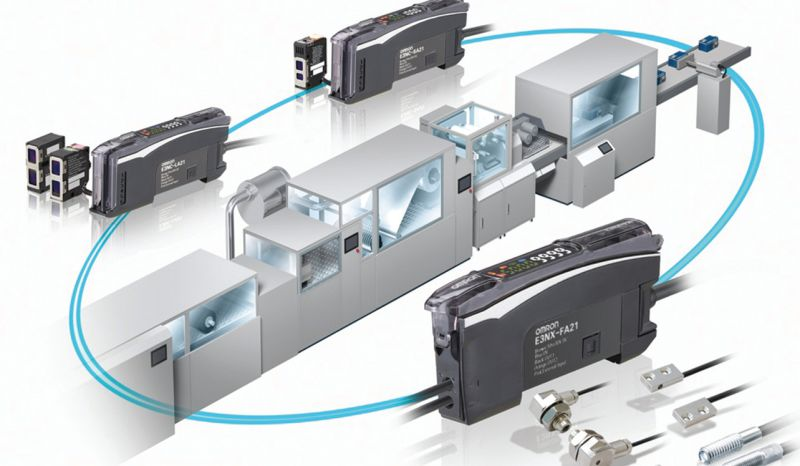
“Omron’s new fieldbus enabled N-Smart range of sensors can be configured automatically from the machine controller,” explained Rossek. “This particularly benefits companies with high levels of product changeover, negating the need for manual reconfiguration during changeover periods which eliminates human error, reduces down-time and improves machine efficiency. This new approach puts control back into the hands of the machine builders and end users handling challenging applications.”
Summary
So, with speed, efficiency, productivity, minimal down-time and flexibility high on the wish list of today’s manufacturers, remaining competitive on price in the face of alternatives from low cost economies would seem an impossible achievement for the UK machine building sector. Not necessarily so, claimed Robert Brooks, Omron’s product marketing manager, “The key to fulfilling all customer requirements, including value for money, is to approach a project holistically. When making their technology selection, machine builders should bear in mind the overall benefits of a system versus the price of individual components.”
It is therefore crucial to consider the lifetime cost benefits of a system to the end user, not just the initial purchase price. Flexible upgrade facilities will extend the working life of a machine, for example, providing greater long term value – the faster a machine works, the more productive it will be, generating greater product volume and providing better value for money – the more reliable a machine, the less down-time it will incur, resulting in reduced maintenance and service costs.
Fortunately, the latest automation technologies provide machine builders with all the tools they need to develop superior machine designs more quickly and cost effectively. Taking a holistic approach to machine building – considering the long term cost and service benefits to the end user rather than simply the initial outlay – will ensure the UK machine building sector continues to thrive, no matter how cheap the competition.
Omron Electronics
T: 01908 258 253