Negotiating the Energy Trilemma – security, affordability, and sustainability – is vital to achieving the UK’s 2050 Net Zero target. In the current energy crisis, sustainability seems to take a back seat. Here, Alastair Morris, Chief Commercial Officer at Powerstar, considers modern transformer technology as a vital means to keep businesses on track with sustainability, while supporting the opportunities of Industry 4.0 in an increasingly automated world.
In the current geopolitical climate, harnessing the opportunities of Industry 4.0 is critical for economic survival. With competing agendas of energy affordability, security and sustainability, new transformer technology can make a real difference to the bottom line – crucial for businesses, and for future growth.
Transformers are critical to the UK’s electrical infrastructure, converting alternating current from one voltage to another, stepping-up or stepping-down to required levels and improving the safety and efficiency of power systems. But the UK’s fleet of transformers is facing a crisis. Nearly 75 percent have been operating for over 25 years, far exceeding design lifespan. This presents pressing issues, as ageing transformers are a clear risk as a point of failure – impacting on the security aspect of the Energy Trilemma, affecting individual businesses and the UK economy as a whole – and adding to huge energy bills. While the losses a power transformer experiences vary, depending upon size, use, age and so forth, for large modern transformers energy efficiency can be as high as 99.75%, whereas older models show drops in efficiency down to 85%. Since operation at high loads is intrinsic to transformer deployment, these losses are costly – now, in an energy crisis, more than ever.
Modern amorphous core technology is proven to provide a super low core loss alternative to conventional Cold Rolled Grain Orientated (CRGO) steel options. The random pattern of the amorphous atom allows for lower resistance to magnetisation cycles, delivering lower core losses – up to 80 percent lower. As a high efficiency option, this can reduce power consumption significantly; meaning lower emissions (greater sustainability), with lower costs (better affordability), while remote monitoring allows for 24/7 visibility of transformer performance and condition – helping to shore-up energy security, the third arm of the Trilemma.
Although amorphous core transformers are more expensive than the conventional alternative at initial purchase, the combination of the Energy Trilemma and an energy crisis make a strong case for investment. In budgetary terms, a standard transformer consumes its initial purchase cost in wasted energy within nine months – in the current energy market, this may soon be down to just several months. Currently, over a 10-year period, a new amorphous core transformer will yield average savings of £25,000, with emission reductions of about 40,000kg.
For industries reliant on CNC – some of the most widely automated industrial processes – amorphous core technology transformers are particularly beneficial. While machines are rated for their market of origin, such as USA or Japanese voltage levels, equipment is usually sold into the UK market with its own step-down transformer. However, and with energy efficiency and equipment longevity in mind, Powerstar are now routinely replacing these with new low-loss alternatives. This dramatically improves efficiency, leading to cost savings and emission reduction – again, helping companies who rely on automation as core to business practice to balance the Trilemma of affordability, security, and the critical aspect that binds these elements together in the current economic and geopolitical climate: sustainability.
If we continue to use outdated transformer technology, then with an albeit already over-extended life usage of 25 years, the direct financial costs to businesses and the negative impact on sustainability are certain to slow progress in benefitting from Industry 4.0 advances, while immediately causing higher than necessary costs at a critical time, greater than necessary emissions just when we need to address these most, and risks to security through placing stress on a vital part of automated process: all three arms of the Energy Trilemma.
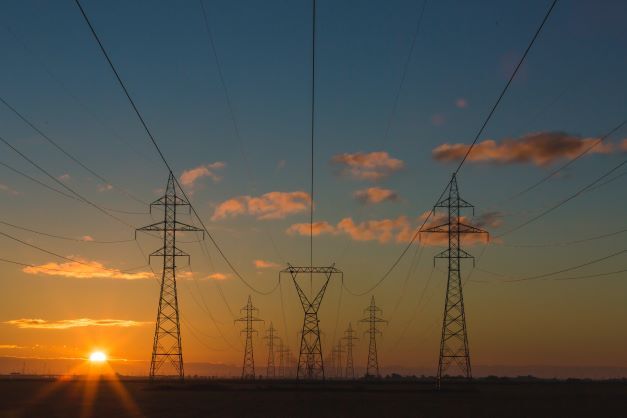
[Image: Matthew Henry for Unsplash]