 Schneider Electric is highlighting the benefits of complying with standard IEC 61850 throughout the entire electrical distribution system, following a growing customer trend to recognise the benefits of adopting a common communications protocol
Although the standard has been in place for eight years, it was originally developed for use on electrical transmission systems above 132kV. Now Schneider Electric is seeing a growing requirement to comply with IEC 61850 on Medium Voltage (MV) distribution systems as it allows inter-operability between solutions from various manufacturers.
IEC 61850 is a standard set for the design of electrical substation automation, enabling the integration of all protection, control, measurement and monitoring functions. The abstract data models defined in IEC 61850 can be mapped to a number of protocols such as MMS (Manufacturing Message Specification), GOOSE, SMV and web services. These protocols can run over TCP/IP networks and/or substation LANs using high speed switched Ethernet to obtain the necessary response times to ensure the performance and security essentials in substations. IEC 61850 defines the functionalities of devices in a High Voltage system and ensures there is a common communications system architecture within substations throughout the process level, cubical level and station level. However, Schneider Electric is encouraging system integrators, consultants and DNOs to look beyond the levels set out by the standard and recognise the benefits of complying with at equipment level also.
Matthew Chapman, protection and control engineer from Schneider Electric explains: “High voltage and medium voltage protections, with their relevant communication protocols, are not dissociable and communication is the common denominator between all the different systems with a differentiating value. Private proprietary and closed protocols do not facilitate the installation of equipment from different manufacturers and communication gateways are necessary to convert the different protocols to enable the different pieces of equipment to communicate between each other.
“We have experienced end-users complaining that products and devices are not interoperable and that maintenance and installation costs are getting higher and higher, so this is why we want to highlight the importance of following the standard all the way through the substation, not just on HV equipment. With communications technology evolving faster than substation’s data, it is becoming less and less acceptable to expect the customer to make frequent changes in their communications protocols.”
By adhering to the standard throughout the entire substation, end users are provided with interoperability, making it possible to exchange information between devices from different manufacturers, with long term stability of the infrastructure owing to a future-proof design as it is possible to easily upgrade or extend installations. It also provides a more efficient installation as self-describing devices reduce setup time and cost. Shared networking for data access, control and process functions reduces wiring and using standardised naming convention instead of numbered registers or tags increases understandability and reduces commissioning time. Overall the customer benefits from lower maintenance costs.
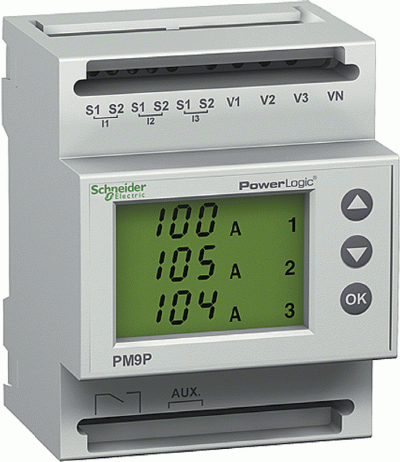
Schneider Electric provides complete substation solutions that are compliant with IEC 61850, from SCADA control systems to protection and monitoring of switchgear. The offer includes its Sepam protection relays, PowerLogic and ION metering range and SCADA systems.
The Sepam range of digital relays provide current and voltage protection for demanding and custom installations. Their use varies across substation incomer and feeder protection, transformer protection as well as motor and generator protection.