
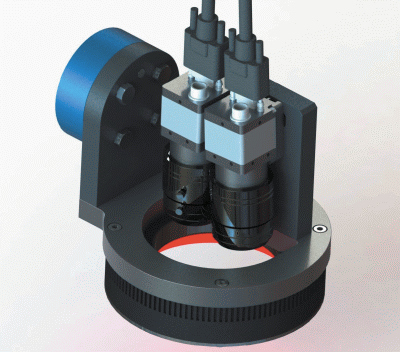
For challenging vision applications; where the installation set up is complex, or a complete turnkey solution including product reconciliation, rejection and handling is required, a vision system integrator can be vital to the success of the project says Robert Pounder of Olmec-UK
As the benefits of machine vision become more widespread and the perceived risks associated with undertaking a new machine vision project have decreased, more and more manufacturing companies are seeking to implement vision systems in their production processes as part of their commitment to enhancing quality. There are many ‘off the shelf’ vision components and applications orientated systems which end users can install and support with little effort.
However, for more challenging vision applications; a vision system integrator can be key to the success of the project. Not only does the customer receive a high quality, fully integrated and tested machine, but there are other benefits from detailed documentation needed to support validation and auditing of equipment (essential in the healthcare and pharmaceutical industries) to manuals, commissioning, training and post installation support.
More than just vision experts
Vision systems integrators also have skills in many other areas. Typical projects include the integration of cameras into existing production lines, combining vision systems with ancillary equipment such as conveyors for product rejection, pick and place, robotics or the provision of stand-alone inspections, separate to the process. This requires expertise in fields as diverse as mechanical design, mechanical handling and transport systems, software, electronics, robotics, control systems and factory networks, as well as CAD (See Figure 1). In addition, it is important to have a good understanding of the specific requirements and standards in different industries. This could range from environmental considerations such as hygiene and washdown requirements in the food and beverage industries to the need for part traceability and identification in safety critical industries such as aerospace industry, to the security and auditing requirements for 21 CFR Part 11 validation in the healthcare and pharmaceutical industries. Given the potential scope of some projects it is essential that the systems integrator works closely with a wide range of hardware suppliers to select, test and provide the latest, most project-appropriate technologies to meet the specific application needs.
Project management
There are a number of stages in a vision systems integration project: project proposal; proof of process; system build; installation; commissioning; training; and post-installation support.
The process begins by understanding the customer’s requirements, using their User Requirement Specification (URS) to develop proposals to meet their specific manufacturing needs in terms of performance, reliability and adaptability. Once the initial proposal has been accepted, the project moves to the crucial ‘proof of process’ phase. Extensive testing is completed on an array of product samples and the manufacturing environment is simulated to ensure that the inspection tests mimic the real-life testing that will ultimately take place. This thorough testing and reporting process validates the components selected and evaluates any software developments to ensure customer confidence in the proposed solution before any investment is made into the full scale equipment.
Documentation
Once the process has been proved, the project is scaled up to full production line size. A detailed Functional Design Specification (FDS) is produced to explain how each point or requirement of the URS is to be met. Additional documentation supports the verification and validation of the equipment. This includes IQ (Installation Qualification), to confirm that the installation meets the agreed design, OQ (Operational Qualification) to establish operational limits and capabilities, and assistance with PQ (Performance Qualification) at which point the system is thoroughly tested on products. These documents specify what and how many are to be verified or measured and how and when this is to be performed, as well as the acceptance/rejection criteria.
Making it happen
The culmination of the project is the installation and commissioning of the vision system on site. The integrator should ensure that an engineer is on hand to help customers understand how to operate and maintain the system and confirm it is performing as expected (See Figure 2). Ultimately the systems integrator is responsible for ensuring the system will run consistently for years to come. The systems integrator should leave customers with a fully supported system. Comprehensive manuals should be provided and training given. Calibration or verification routines for customers to confirm the system’s capability on a day to day basis should also be provided.
Added value
Olmec-UK is committed to the partner relationship established with a customer extending throughout the lifetime of the production line containing the vision system. To this end, Olmec also provides remote diagnostics for the system, which enables instant response assistance for the customer as though Olmec were a member of the team. This technical support for staff on site provides real added value by maintaining optimum system operation and the long-term system reliability.
