In this day and age, we connect to the internet in so many ways. Because so much of our lives are tied to the online realm, it can be easy to forget about what is happening in the background. Most importantly, the way we connect to the internet.
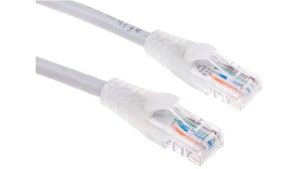
Though wireless is all the rage these days, there is nothing that tops a solid wired connection. Ethernet connections come in different shapes and sizes, the CAT6 being one of them. Here’s what you need to know about using ethernet cables.
How Does Ethernet Work?
Before you can start to worry about finding a CAT 6 cable, it helps to know how ethernet works. The business world prefers ethernet cables because they are more secure, providing regular internet access for just about all industries, from medical to military, warehousing to shipping.
Ethernet connects devices and LANs through hubs and switches. Information and data are transmitted through a carrier sense multiple access (CSMA) and collision detection (CD) device. It is a blend of sender information, the receiver, speed, and everything else.
10 Gigabit Ethernet
Though there are a variety of ethernet types, 10Gigabet ethernet is the fastest you will find. It is also the latest, with CAT6 being the most current. As the name implies, this ethernet protocol can hit speeds of up to 10Gbps of data speed transfer. Though speed is the name of the game, there is more to it than that.
Even better, using 10 Gigabit ethernet, you can bridge and connect LANs up to 6.2 miles apart. For larger enterprises and manufacturing properties, CAT6 is the preferred method. There is also a coding sublayer capable of delivering 66 signals per pair of wires, plus a clock rate of more than 300MHz. CAT6 can deliver excellent speed and bandwidth, a must for businesses of all sorts these days.
The Advantages of Using CAT6 Ethernet
Now that we know a little more about CAT6 and ethernet, in general, let’s get down to the most important part. What kind of advantages can you garner from connecting your LANs using CAT6 ethernet cable? Check out the best reasons below.
Speed. Naturally, speed is the biggest reason to make the investment in CAT6 ethernet. High data transfer speeds can really cut down on time in the long run. Wireless might be more flexible, but they cannot possibly hope to match the transfer speeds that CAT6 ethernet can.
For businesses that require the transfer of large-scale data, ethernet is efficient enough that it can get the job done in a few hours at the most.
Better data transfer quality. Speed is great, but it is the transfer quality that matters most. Ethernet is able to boost speeds while also maintaining a higher quality data transfer that doesn’t have any noise. Wireless connections can suffer from interference from electromagnetic noise.
That noise creates disruptions while also degrading the quality of the data transfer. Ethernet cables, particularly CAT6, are well shielded from that interference. All of which leads to a better quality of data transfer.
Data security. Ethernet also happens to be the most reliable means through which to transfer data. Security measures are much better compared to Wi-Fi and any other type of wireless connection. Accessing that data means needing to be physically attached to a device within that network. Wireless connections, however, are open and can be intercepted without the need for any physical device.
Businesses use CAT6 ethernet because of the speed, but also because of the security involved. Safer transfers create fewer problems with data transfers, especially of critical information.