Ask anyone who has taken over a newly built chemical plant what arrived with the keys. The answer rarely changes: thousands of documents, several versions of the same P&ID and a data handover that someone in maintenance will still be untangling years later. Digital twins were meant to fix this, but in many plants they have simply inherited it.
The cost has been measured before. A 2004 study commissioned by the US National Institute of Standards and Technology put the price of poor interoperability in capital facilities at $15.8 billion a year, with owners and operators carrying roughly two thirds of it. The figure is two decades old, but the symptoms it described, manual re-entry of data, duplicated work and a reliance on paper, will sound familiar to anyone who has lived through a handover. ARC Advisory Group has long traced most owner-operator losses on asset information back to one moment: the transfer from project to operations.
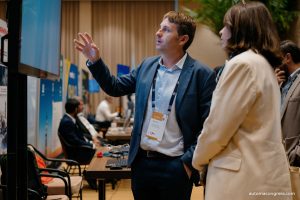
That gap between the plant as designed and the plant as run is one of the questions on the agenda at the Chemical Automation and Digitalisation Congress (Automa Chem) 2026, taking place in Berlin on 26-27 October, where a dedicated session covers digital twins and the data thread that should run through a plant’s entire lifecycle.
Start the thread where the plant starts
Gregor Tolksdorf, Data Excellence Consultant at Evonik and Head of Specification Teams at DEXPI, is set to look at why so many digital twins struggle long before anyone builds them. Often they rest on fragmented data that was never linked to information from earlier lifecycle phases, so they remain isolated tools rather than systems that span the life of an asset.
His presentation focuses on moving digitalisation upstream, into process and plant engineering, where functional plant data is first created. DEXPI, the data exchange standard for the process industry, makes the information behind PFDs and P&IDs machine-readable and vendor-neutral, so engineering intent survives the trip to EPCs, operators and maintenance teams. The approach is reflected in an Asset Lifecycle Information Management best practice published earlier this year with the backing of organisations including IOGP and NAMUR. The logic is simple enough: a thread that doesn’t start in engineering has to be rebuilt, at considerable cost, at every stage that follows.
The handover, where threads usually snap
Virginia Lobato Bañeros, BIM and Digital Twin Section Leader at Técnicas Reunidas, brings the contractor’s view. Her team uses 3D and BIM models to test plants before construction, ties 4D and 5D planning to cost control and live site monitoring, and treats the twin as one environment for data, documentation, costs, safety, operation and maintenance. Drones, laser scanners and computer vision keep it in step with the physical plant, supported by the company’s own platforms and AI tools, including TRIA, LUA, LEO and ATLAS.
From molecule to market
Mayank Patel, Industry Strategy Director for Chemicals at Siemens, widens the lens. R&D, engineering and manufacturing in chemicals often still run on disconnected models, and his presentation looks at how high-fidelity gPROMS process twins, built on first-principles knowledge combined with plant data, can carry insight from process development and scale-up through to real-time operations.
A twin people actually open
None of this pays off if the people running the plant never look at it. Andre Angenendt, Process Expert for Engineering Services at Lanxess, presents a familiar problem from the operator’s side: plants hold vast amounts of data, yet the right piece is rarely to hand at the right moment. Lanxess pairs a photorealistic twin, PLANTVIEW, with digital asset identities, XID, linking laser scans and QR codes on equipment to existing enterprise systems. Stand in front of a pump, and its history is a scan away. The use cases are refreshingly down to earth: onboarding, maintenance preparation, troubleshooting and passing knowledge to the next shift.
When the data finally earns its keep
Francesco Bonacini, Leader of Process Data Analysis and Modelling at Versalis, brings a case study of what becomes possible once data is reliable and in context. On a polystyrene unit, NIR probes installed directly on the line replaced the wait for laboratory results with in-line quality information. A machine learning model now estimates Melt Flow Index, which conventional instruments cannot measure in real time, and a version built on variables operators can adjust gives an estimate several hours before the product reaches the outlet.

The unglamorous part
Taken together, these talks make an unfashionable argument. The impressive layers of a digital twin, the 3D model, the simulation, the AI on top, all depend on the least impressive one: consistent engineering data, created once and carried carefully from design to daily operation. Get that right and the twin becomes a working tool. Get it wrong and every new project opens with the same expensive clean-up.
Automa Chem 2026 brings chemical producers, EPCs and technology providers together in Berlin to work through these questions. The full business programme is available on request via the Congress website: https://sh.bgs.group/56k