Keith Fisher, president of Honeywell Intelligrated, explores the key emerging trends that will shaping warehouse automation over the next year. They reflect a core theme for the industry: that automation adoption is on the rise, and it’s bringing with it enhanced safety, productivity and workforce retention.
Warehouse and distribution centres (DCs) are grappling with a significant and ongoing labour shortage, and neither increased wages nor benefits have been able to reverse this. Ever-increasing demand for faster delivery, and ongoing macro supply chain disruption add to the challenge. Warehouse safety issues also remain a problem for recruitment and retention of workers.
Amidst a ‘perfect storm’ type of environment, warehouse and DC operators are aggressively seeking ways to digitise operations, add automation technology and integrate those technologies with software systems, with the aim to increase efficiency, reduce the human labour requirement and create safer, more productive workplaces.
The six trends
Specifically, Honeywell sees six trends emerging in the warehouse and DC industries.
- Increasingly aggressive adoption of proven automation technologies
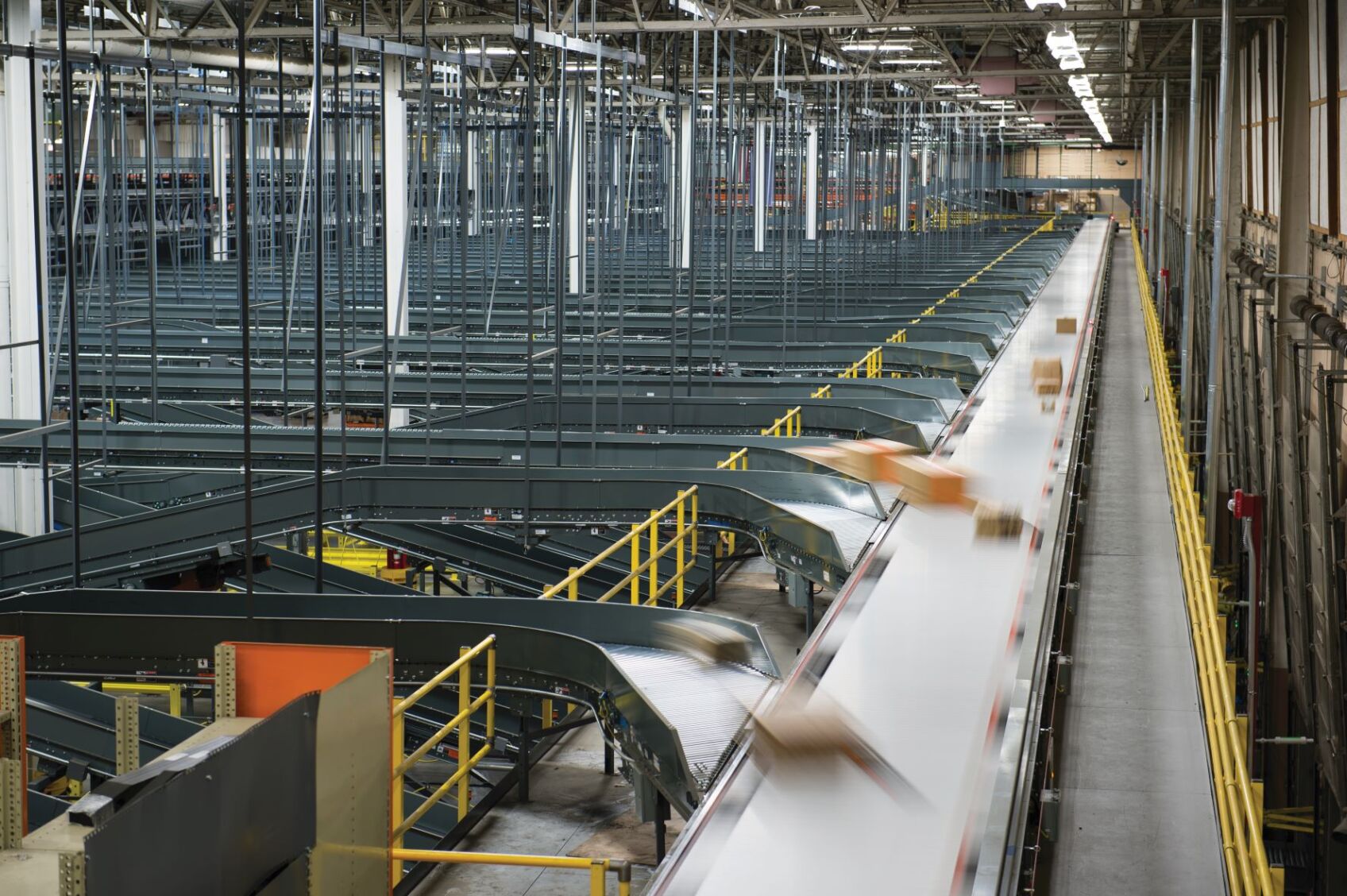
We are already seeing heightened interest in long-proven warehouse automation systems that pick, pack, sort and carry packages throughout the facility. There is also increasing investigation into how to integrate this automation into warehouse software systems, such as warehouse management and warehouse control systems (WCS), to extract more value from automation.
Regardless of the labour shortage or where companies currently sit on the automation spectrum, SKU proliferation, widely varying order profiles and seasonal demands are making some degree of automation a necessity. For many operations, order picking or putting are the entry point to digitalisation and automation. For those further down the path, integrating these technologies into operations means trained coordination between workers, automated systems and software to drive high-speed, high-volume warehouse execution.
- Newer forms of automation are being evaluated and adopted with increased urgency
There are also signals that newer forms of automation, such as robotic palletising/depalletising and Autonomous Mobile Robots (AMRs), are also heading toward significant adoption. For example, a recent Interact Analysis report showed the mobile robot market is expected to grow from $3.6bn in 2021 to $18bn in 2025.
AMRs provide significant productivity benefits by, for example, automating the movement of carts used to transport picked orders or returns. Instead of spending more than half the day walking, workers can park carts in pickup locations and call robots to retrieve them. Additionally, robotic palletisers and depalletisers limit the need for heavy and/or awkward lifting by humans. While these and other advanced forms of automation handle the repetitive, difficult and often time-consuming tasks, scarce labour resources can be shifted to higher-value jobs and, in-turn, increase employee satisfaction.
- Persistent labour shortage, technical skills gap and training
The number of warehouses globally is forecast to rise from some 150,000 in 2020 to 180,000 by 2025, states Interact Analysis. Without more automation, an additional 3.5 million warehouse workers need to be added to cover that expansion. In any case, a willing workforce is proving very difficult to find and competition for these resources is high. As a result, warehouse and DC operators will look to expand automation, but this creates another fast-developing problem: the technical skills needed to utilise, maintain and optimise warehouse automation. Operators will actively look to outsource automation-related training, which will make warehouse jobs more attractive and drive higher compensation, thus making the overall market more compelling for job seekers and those seeking upskilled career transitions.
- The use of digital twins will accelerate to help automated warehouse planning
Digital twins deliver virtual representations of a physical environment, proving extremely helpful in the warehouse industry. With a digital twin, new automation technology can be tested virtually, without downtime or rearrangement of physical assets. Automation efforts can be tested and the impacts reviewed.
By using digital twins and synthetic data modelling, warehouse operators can close the loop between planning, training and implementation on the floor. With this technology, what used to equate to months of automation implementation can now be accomplished in days. In short, warehouse performance can be improved far more quickly and cost-effectively than in the past.
- Human health and safety will begin to take root as a business case for automation in the new, pristine warehouse environment
Regardless of whether there are health and safety issues at a particular warehouse, the overall industry suffers from a health and safety image problem. It’s well documented that concerns in these areas are either keeping workers away from the industry entirely or causing problems with existing employee satisfaction.
Automation can help. Repetitive movement-related injuries and those due to heavy and/or awkward lifting, as well as worker fatigue, can be greatly mitigated by robotics and automation. Using technology can lead to far fewer work-related injuries, keep workers on the job and earning for their families, and mitigate insurance premiums and worker’s compensation claims for the employer. By prioritising happier, healthier workforces, there will be an uptick in retention and warehouse job appeal.
- Accelerated dark warehouse research & development, forward-looking companies begin path
Dark warehouses promise to be nearly fully automated and autonomous, operating virtually free from human intervention – aside from planning, maintenance and ongoing optimisation. They will operate 24/7/365 in no light (thus the term “dark” warehouse) and in any extremely cold or warm conditions, thus saving energy and related costs. They promise to help solve the labour shortage and improve efficiencies. However, full concepts are still at least two years away, with live implementations at least three. Breakthrough technologies in robotics, sensing and control and IT are still needed. But, demand is so strong that it’s beginning to drive more R&D investment to achieve these breakthroughs faster.
Meanwhile, forward-looking warehouse operators are starting the journey to dark warehouse by not only putting automation piece parts in place as described above, but also tying technologies together via software, such as Warehouse Execution Systems, allowing all the technologies to communicate.
As promising as it is, the brave new world of dark warehouses will also contribute to the developing technical skills gap. Operators will need to plan for that, as well as determine what types of warehouses and industries are most appropriate for the early days of dark warehouses.