 Discover the warehouse automation technology and techniques guiding businesses into the future of warehousing
In the 2020s, warehouse automation is evolving faster and more dramatically than ever before. Change has come from COVID-19, the ever-accelerating growth of ecommerce, and the rising number of companies selling in both B2C and B2B spheres. All this makes automation in the warehouse an ever more attractive prospect for more and more businesses. But what trends and developments can be expected in 2023 and beyond?
Automation costs continue to decline
The technology that makes automation possible has always been widely available and highly accessible. However, it has only been in the last few years that robotic automation has been reconfigured into a flexible automation arrangement. This allows for a much lower cost of deployment than the heavily infrastructure-reliant fixed automation model.
 Without the need to install rails, racks, and built-in-place static storage stacks, the flexible model costs much less, works much faster, and can be deployed far faster. This model is becoming more and more popular, and the market as a whole is growing. CAGR projections for global robotics automation as a market range from 8-16%, while projections for the UK-specific warehouse automation market show CAGR of 24%. With a growing market for a faster-to-install product and a market that is still growing but not yet dominated by a single/small group of providers, the overall trend of costs in robotic warehouse automation is only going to go down.
Robots as a service
While more and more businesses have enough demand to need to move into automation, the upfront costs might still be too high for many executives to stomach a full purchase of such technology. That is why a growing number of providers are offering warehouse automation solutions as something to be hired on an ongoing basis rather than purchased outright. The attractiveness of this option is being amplified by inflation causing rises in business costs in every area. Combined with the ease of installing flexible robotics, and the number of warehouse environments they are compatible with, it’s no wonder this model is popular in the current era.
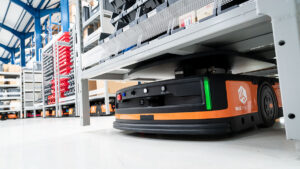 However, this does have the effect of changing the game when it comes to robotic provision itself. Instead of being primarily concerned with matters such as the technical capacities of the robots or the sophistication of the sensors and safety systems, potential automation buyers now need to look at client relationships and customer service. When choosing a potential industry 4.0 partner, businesses will now need to know if the company they are working with can be relied upon for genuine support and serious service in the long term. In a new market, finding robust partners could well be difficult, but far from impossible.
Small space specialism
The race for warehousing space continues to be a major concern in the UK as it is in many other countries. With Amazon buying up larger and larger portions of Britain’s available commercial real estate, warehouse operators are finding themselves needing to much more with the space they have, as opposed to simply expanding or relocating as they might have done in the past.
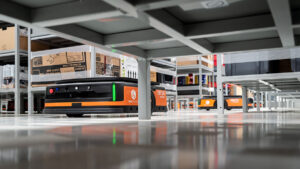 Because of this, the automation businesses that are going to see the most attention are those able to work with smaller or more unorthodox-shaped spaces. Those fixed automation providers, who often have to be limited to delivering large-scale operations in specially constructed warehouses may find themselves struggling to keep pace with the more nimble and flexible businesses that are capable of meeting the demand for high performance in small spaces. Exactly what flexible automation can deliver.
Joe Daft, Head of Robotics at Wise Robotics
joe.daft@wiserobotics.com